Stay updated with the latest company announcements, technology developments, industry events, and new product releases from Dufew Electric.
Article Summary: This blog explores the definition, importance, working principle, selection criteria, and application timing of detuned harmonic filters. It explains how these filters protect capacitors and improve power quality in industrial environments. As a professional manufacturer, Dufew provides reliable detuned harmonic filter solutions tailored to your specific needs. The article includes comparison tables, application lists, and a dedicated FAQ section to address common concerns.
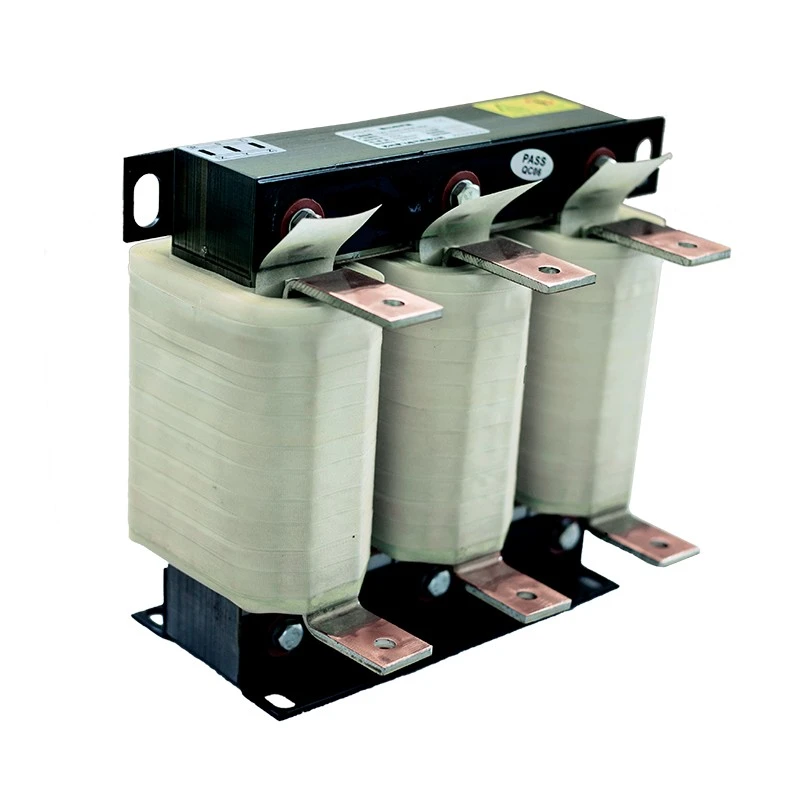
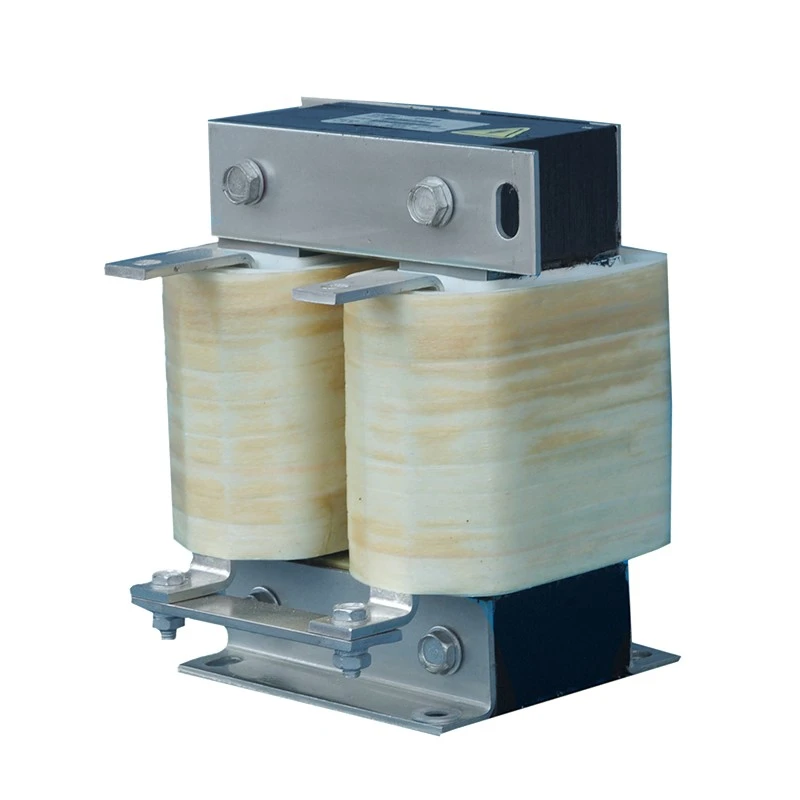
A detuned harmonic filter is an electrical device consisting of a capacitor bank connected in series with a reactor (inductor). The reactor is selected so that the filter's resonant frequency is tuned below the lowest harmonic frequency present in the system (typically the 5th harmonic at 250 Hz or 300 Hz). This prevents the capacitor bank from amplifying harmonic currents, thereby avoiding resonance and protecting the capacitors from overload. Unlike a pure harmonic filter, a detuned filter does not eliminate harmonics entirely; instead, it shifts the resonance point to a safe, non-harmonic frequency, making the system more robust and reliable.
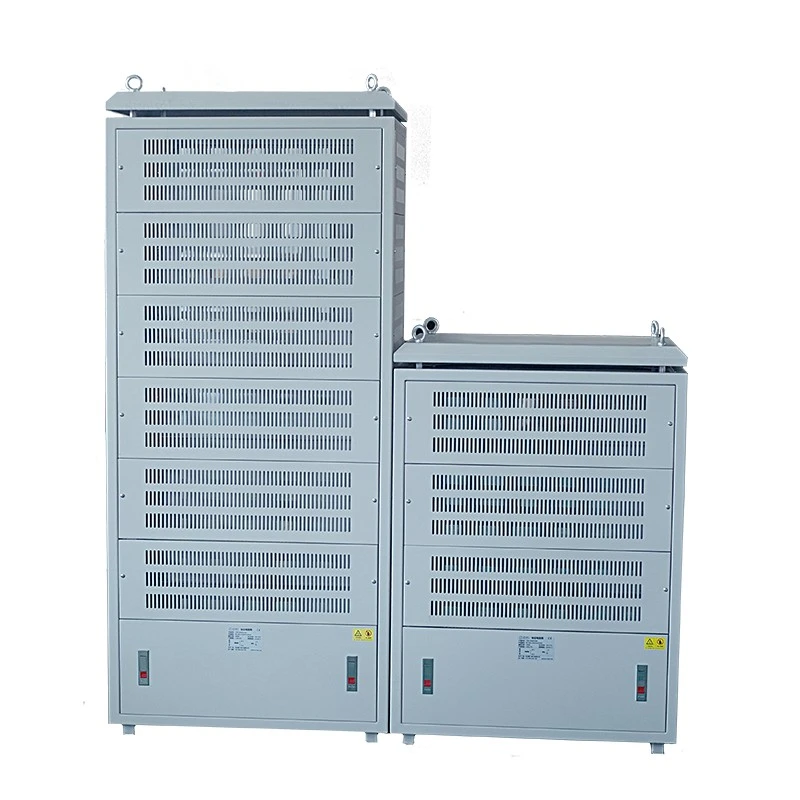
At Dufew, we design and manufacture detuned harmonic filters that combine high-quality capacitors with precisely tuned reactors to ensure stable operation in harsh industrial environments. Our filters are widely used in low-voltage and medium-voltage networks to improve power factor and suppress harmonic resonance.
Harmonic distortion is a growing problem in modern power systems due to the widespread use of non-linear loads such as variable frequency drives (VFDs), rectifiers, and LED lighting. Without proper mitigation, harmonics can cause:
Detuned harmonic filters address these issues by preventing resonance and reducing harmonic currents flowing into the capacitor bank. They also improve the overall power factor, reducing reactive power charges. For facilities with significant non-linear loads, a detuned filter is not just an option—it is a necessity for reliable and efficient operation.
The working principle of a detuned harmonic filter is based on creating a series resonant circuit at a frequency below the lowest harmonic order that needs to be avoided. The filter consists of a capacitor (C) and a reactor (L) in series. The resonant frequency \( f_r \) is given by:
\( f_r = \frac{1}{2\pi\sqrt{LC}} \)
By choosing the reactor such that the resonant frequency is, for example, 189 Hz (tuned to 3.8th harmonic) in a 50 Hz system, the filter appears capacitive at the fundamental frequency (50 Hz) but inductive at harmonic frequencies (e.g., 5th and 7th). This prevents the filter from drawing harmonic currents and avoids parallel resonance with the system impedance. The reactor also reduces the voltage stress on the capacitor, extending its lifespan.
The table below illustrates typical detuning factors and their corresponding resonant frequencies and applications:
| Detuning Factor (p) | Resonant Frequency (50 Hz system) | Resonant Frequency (60 Hz system) | Typical Application |
|---|---|---|---|
| 5.67% | 210 Hz (4.2th harmonic) | 252 Hz (4.2th harmonic) | Systems with 5th harmonic dominant |
| 7% | 189 Hz (3.8th harmonic) | 227 Hz (3.8th harmonic) | General industrial networks with 5th and 7th harmonics |
| 14% | 134 Hz (2.7th harmonic) | 160 Hz (2.7th harmonic) | Systems with significant 3rd harmonic (e.g., single-phase loads) |
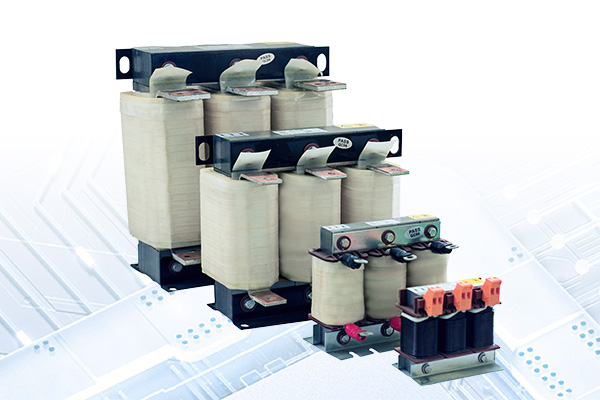
Dufew offers detuned filters with various detuning factors and reactor types (dry-type or oil-immersed) to match your specific harmonic profile.
Selecting the right detuned harmonic filter depends on several factors, including the system voltage, the dominant harmonic orders, the required reactive power compensation, and the environmental conditions. The main configurations are:
When choosing a configuration, consider the following table of key parameters:
| Parameter | Consideration |
|---|---|
| System Voltage | Low voltage (400V–690V) or medium voltage (up to 36kV). Dufew offers both. |
| Harmonic Spectrum | Identify the 3rd, 5th, 7th, and higher harmonics. Choose detuning factor accordingly. |
| Reactive Power | Determine the required kvar to improve power factor to the desired level. |
| Load Variability | For fluctuating loads, automatic switching is recommended. |
| Environmental Conditions | Temperature, altitude, humidity, and pollution level affect filter design. |
Dufew's engineering team can assist you in selecting the optimal detuned harmonic filter configuration for your project. We provide customized solutions based on detailed system studies.
You should consider installing a detuned harmonic filter in the following situations:
Timing is also important for maintenance: regular inspections of capacitors and reactors are recommended to ensure the filter continues to operate effectively. Dufew provides after-sales support and spare parts to keep your filters running smoothly.
Q: What is the difference between a detuned harmonic filter and a pure harmonic filter?
A: A detuned filter prevents resonance by shifting the resonant frequency to a safe value, but it does not absorb a significant amount of harmonic current. A pure harmonic filter (e.g., an active filter or a tuned passive filter) is designed to actively cancel or absorb specific harmonic currents. Detuned filters are simpler and more cost-effective for systems where resonance prevention is the primary goal.
Q: Can a detuned harmonic filter improve power factor?
A: Yes, the capacitor bank in a detuned filter provides reactive power compensation, improving the power factor. However, the reactor reduces the effective capacitance slightly, so the compensation capacity is lower than that of a plain capacitor bank of the same rating. Dufew's engineers can calculate the exact compensation for your needs.
Q: How do I choose the detuning factor?
A: The most common detuning factor is 7% (tuned to 189 Hz in 50 Hz systems or 227 Hz in 60 Hz systems), which is suitable for systems with dominant 5th and 7th harmonics. For systems with significant 3rd harmonic, a 14% detuning factor is recommended. Dufew can perform a harmonic analysis to determine the optimal factor for your system.
Q: What maintenance does a detuned harmonic filter require?
A: Regular maintenance includes checking capacitor capacitance (to detect aging), inspecting reactors for overheating or loose connections, and cleaning dust from components. Dufew recommends annual inspections and provides detailed maintenance guidelines.
Q: Can Dufew provide custom detuned harmonic filters?
A: Absolutely. Dufew specializes in customized solutions. We can design filters for specific voltages, frequencies, harmonic profiles, and environmental conditions. Our team works closely with you to ensure optimal performance and reliability.
Ready to enhance your power quality and protect your electrical equipment? Whether you need a standard detuned harmonic filter or a fully customized solution, Dufew is here to help. Our experienced engineers will analyze your system, recommend the optimal filter configuration, and deliver high-quality products that meet your specifications. Don't let harmonics compromise your operations—contact us today to discuss your requirements and get a personalized quote. Let Dufew be your trusted partner in power quality solutions.