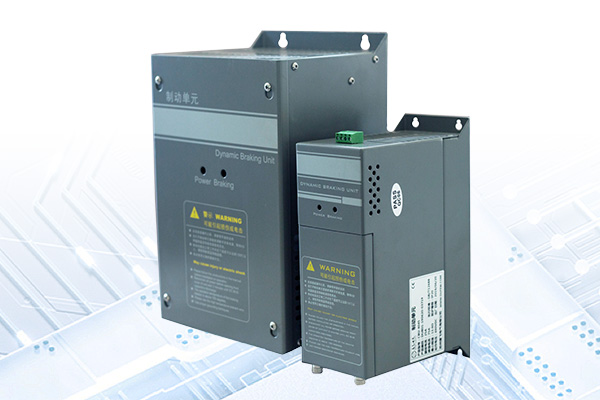
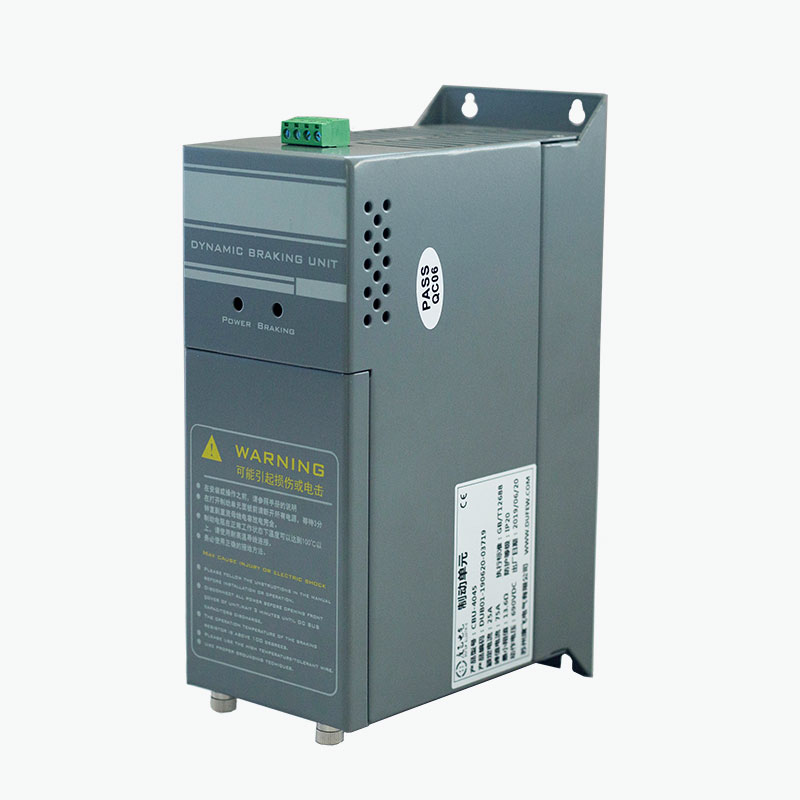
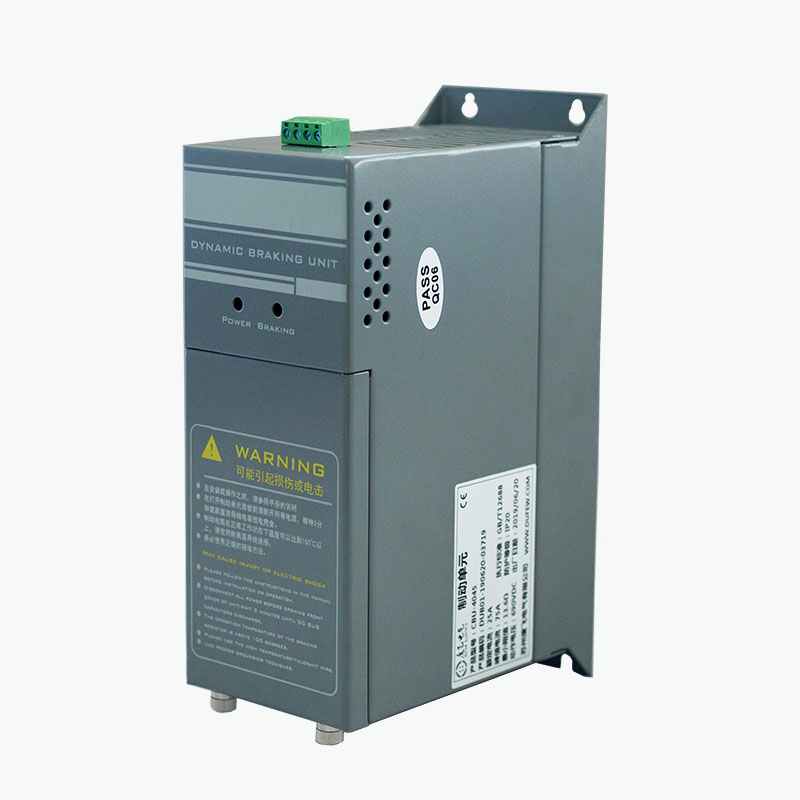
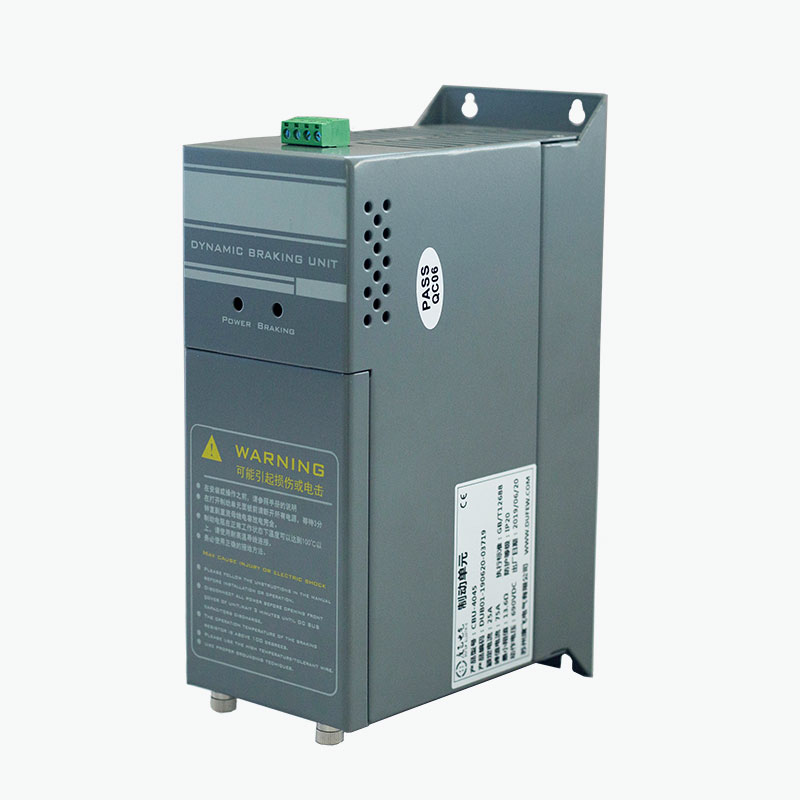
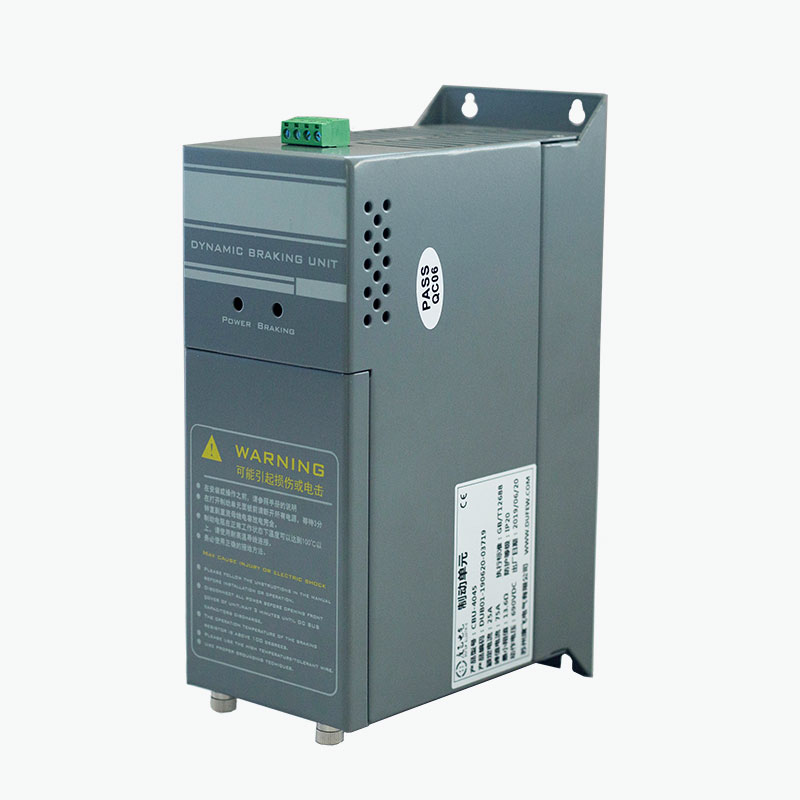
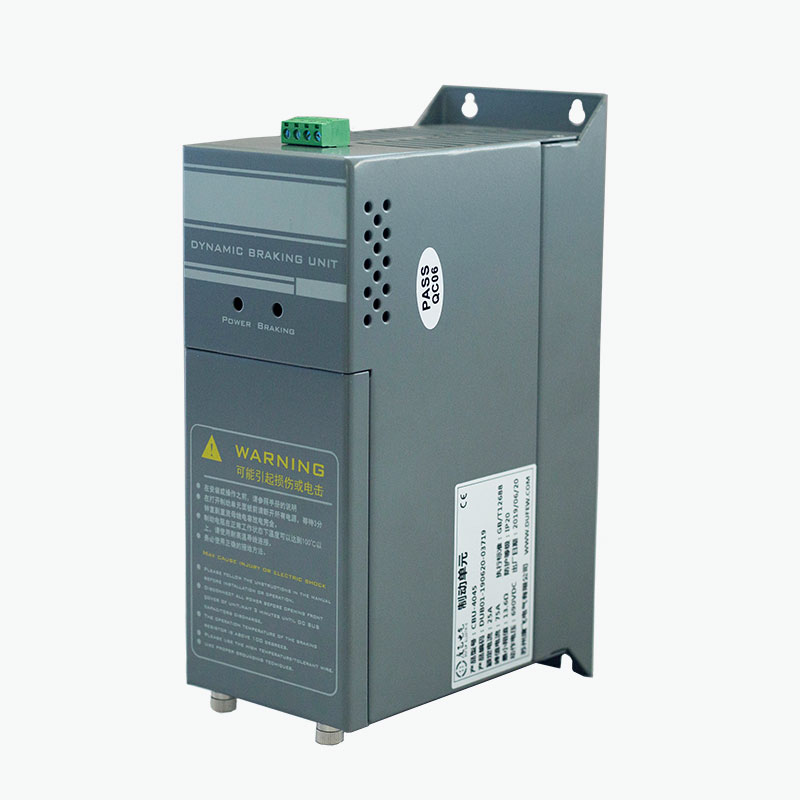
A Braking Unit is a power electronic device used to manage regenerative energy generated during motor deceleration. It monitors the DC bus voltage and activates the braking circuit when the voltage reaches a defined level.
The excess energy is then transferred to an external resistor and converted into heat. The drive can continue decelerating without allowing the DC bus voltage to rise beyond its permitted range.
It is a simple principle, but correct sizing is essential.
How Does Dynamic Braking Work?
During acceleration and normal operation, the drive supplies power to the motor. During deceleration, the motor may operate temporarily as a generator and send energy back to the DC link.
If this regenerative energy exceeds the absorption capacity of the drive, the DC voltage increases. Once the preset threshold is reached, the switching circuit connects the energy-dissipation path.
The braking resistor absorbs the energy and releases it as heat. This helps control the DC bus voltage and supports stable deceleration.
When Is This Solution Required?
Not every inverter requires an external braking circuit. The requirement depends on the load and operating cycle.
It is commonly considered when equipment involves:
-
Rapid acceleration and deceleration
-
Frequent stopping and starting
-
High-inertia loads
-
Vertical lifting or lowering
-
Short stopping times
-
Repeated regenerative operation
Typical applications include elevators, cranes, hoists, conveyors, centrifuges, winding machines, machine tools, and other equipment where controlled deceleration is important.
Braking Unit and Resistor: A Coordinated System
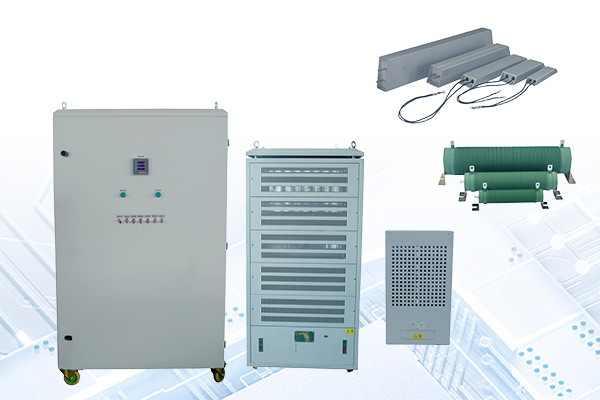
The switching device and the energy-absorbing component perform different jobs. The former controls when the braking circuit is activated. The Resistor dissipates the regenerated energy.
Both need to be properly matched.
Resistance value, braking power, overload capacity, duty cycle, cooling conditions, and installation environment all affect the performance of the complete system. An undersized resistor may overheat, while an unnecessarily large configuration can increase cost and installation space.
Working with Reactor and Filter Components
Industrial motor drive systems often require several types of power electronics components. Each one addresses a different electrical requirement.
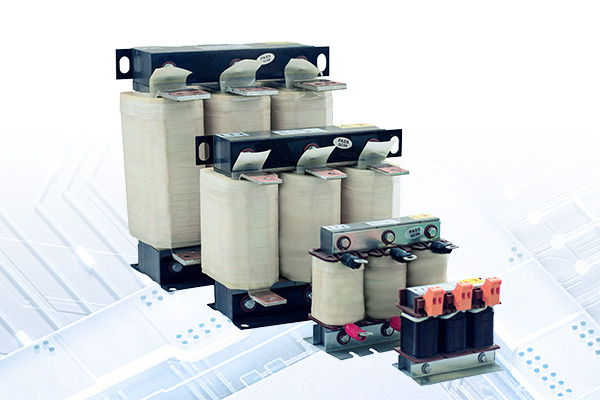
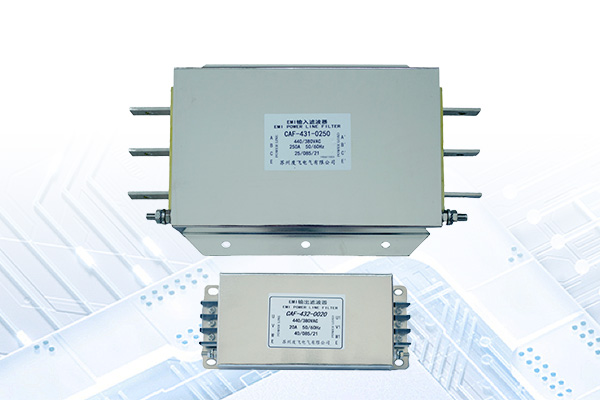
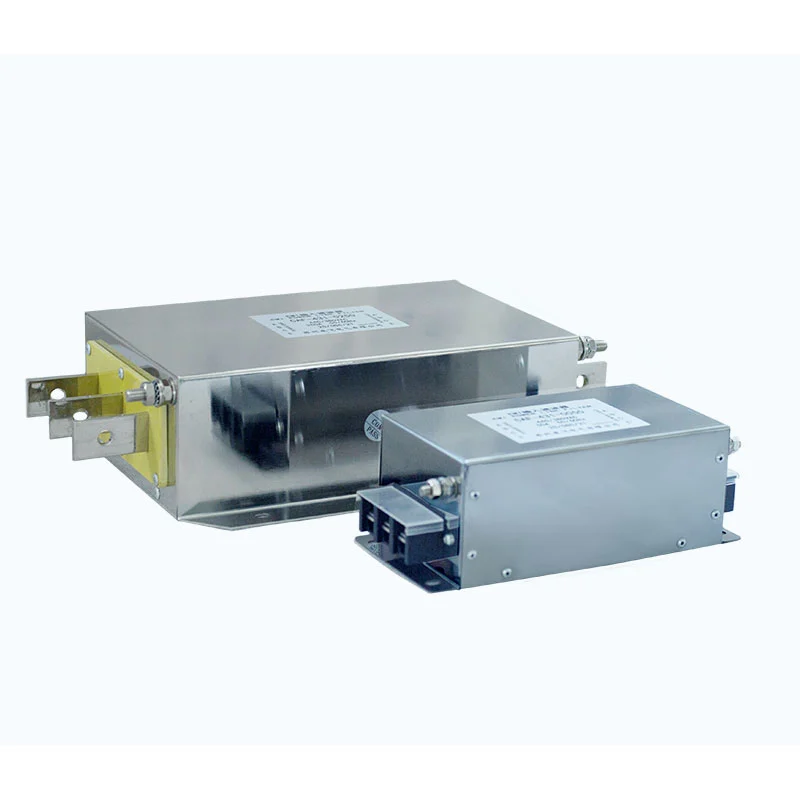
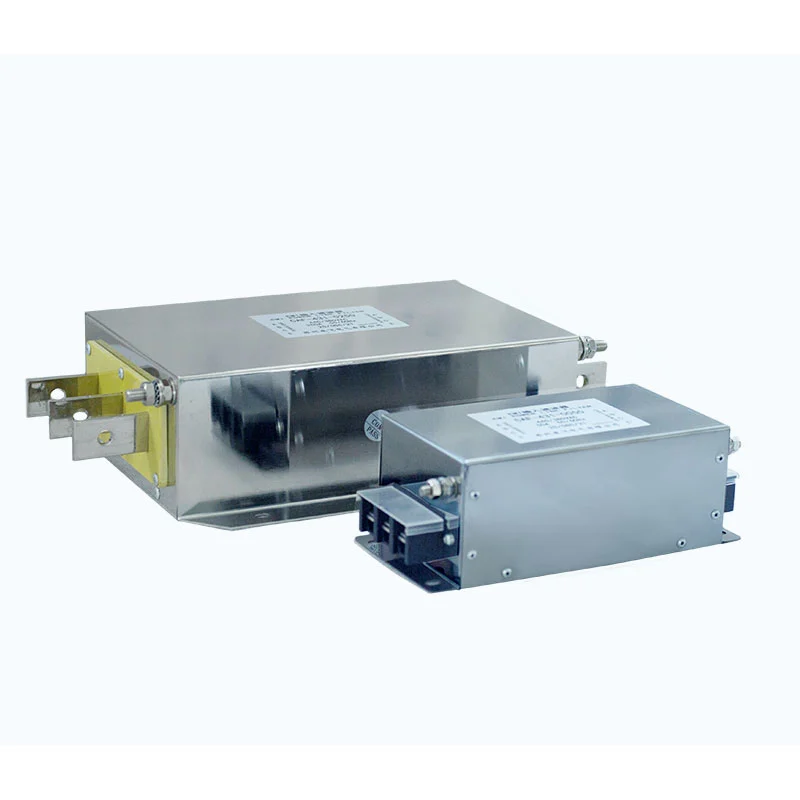
A Reactor can help limit current fluctuations and reduce electrical stress. A Filter can be used to control unwanted high-frequency interference or harmonics. The braking circuit has a different purpose: managing regenerative energy during deceleration.
Used together where required, these components can contribute to better power quality, equipment protection, and overall drive stability.
How to Select the Right Configuration
Motor power alone does not determine the correct specification. The operating cycle matters just as much.
Key factors include DC bus voltage, motor capacity, load inertia, deceleration time, braking frequency, duty cycle, ambient temperature, and the energy generated during each braking cycle.
The braking resistor must also be compatible with the drive and switching characteristics. For demanding applications, thermal performance and overload capability should be evaluated together with the electrical rating.
For OEM projects, Dufew Electric can review the application parameters before production and help determine a suitable configuration.
Customized Manufacturing Capability
As an experienced Braking Unit manufacturer in China, Dufew Electric supports customized designs for different drive systems and installation conditions.
Customization may cover electrical ratings, enclosure dimensions, connection methods, cooling requirements, protection features, and integration with the corresponding braking resistor.
Each project can be evaluated according to its actual working conditions. This helps ensure that the final configuration fits the equipment rather than relying only on a standard specification.
Industrial Applications
Dufew Electric solutions are suitable for a wide range of equipment where rapid or controlled deceleration is required.
-
Elevators and lifting equipment
-
Cranes and hoists
-
Conveyors
-
Machine tools
-
Centrifuges
-
Winding equipment
-
Industrial automation systems
-
Renewable energy equipment
The main objective is controlled energy dissipation. Depending on the application, this can help reduce DC bus overvoltage faults, support shorter stopping times, and improve the operating stability of the drive.
Dufew Electric as a Power Electronics Supplier
Dufew Electric supplies power electronics components to OEM manufacturers, system integrators, distributors, and industrial users. Its product range covers resistive, inductive, filtering, and braking applications.
The company holds ISO and CE certifications and applies standardized manufacturing and inspection procedures. From technical specification review to production and final inspection, each stage is managed according to the requirements of the application.
For customers sourcing from a China factory, Dufew Electric provides a practical combination of engineering support, customized production, and consistent supply.
FAQ
Q1: What causes DC bus overvoltage during deceleration?
When a motor slows down, it can return energy to the drive's DC link. If the energy cannot be absorbed quickly enough, the DC bus voltage rises and may cause an overvoltage fault.
Q2: Does every inverter need an external braking circuit?
No. The requirement depends on the drive, load inertia, deceleration time, and operating cycle. Applications with high-inertia loads or frequent rapid stopping are more likely to require external energy dissipation.
Q3: How is the braking resistor selected?
Selection should consider the drive's minimum resistance requirement, braking power, energy per cycle, duty cycle, braking frequency, and thermal conditions. Motor power alone is not enough.
Q4: What is the difference between dynamic braking and regenerative braking?
Dynamic braking dissipates regenerated energy as heat through a resistor. Regenerative braking sends suitable recovered energy back to the electrical supply or another usable energy-storage system. The choice depends on the drive architecture and application requirements.
Q5: Can Dufew Electric provide customized designs?
Yes. Dufew Electric can evaluate drive parameters, braking requirements, operating cycles, installation conditions, and mechanical requirements before production. Customized electrical ratings, dimensions, cooling arrangements, and connection methods can be considered.